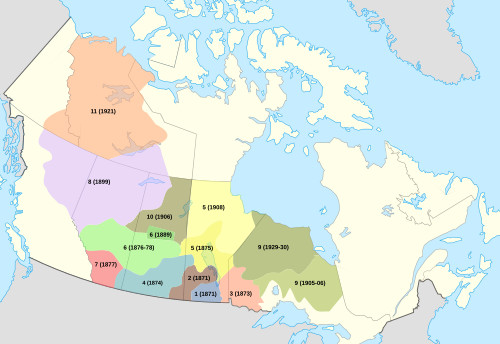
From an Indigenous perspective, treaties were never just ink on paper. They were sacred agreements made between sovereign First Nations, the Crown, and the Creator, carried through spoken words, pipe, feast, gift exchange, and ceremony as much as through written text. The Treaty Relations Commission of Manitoba explains that the spirit and intent of treaty includes those spoken words and actions that were not captured on paper, and that treaty partners were bound not only by a document but by honest words and honourable acts as well. That is why treaties cannot be reduced to archives, plaques, or one paragraph in a schoolbook. They are living responsibilities.
That living responsibility begins with relationship. Even Canada’s own treaty page now admits that treaties provide a framework for living together and sharing the land, but First Nations leaders have been clearer: in 2025 Treaty 6 leaders said their treaties were “not a surrender but a promise,” and described them as sacred, living covenants entered through Indigenous law, governance, and mutual recognition, not subjugation. That is the truth too often buried under Crown paperwork. Treaties were not meant to erase Indigenous jurisdiction or turn Nations into subjects of provincial convenience. They were meant to define how peoples would live alongside one another without extinguishing who Indigenous peoples are.
Because of that, treaties are not history alone; they are law now. Section 35 of the Constitution Act, 1982 recognizes and affirms existing Aboriginal and treaty rights, and Justice Canada says historic treaties must be interpreted purposively, informed by the honour of the Crown, not through a frozen-in-time reading that shrinks them to whatever is easiest for governments. Justice Canada also says treaties must be read in a way that protects the integrity of the Crown and does not permit sharp dealing. In other words, the Crown cannot promise one thing at treaty time and then spend generations pretending the promise meant less.
The Supreme Court’s 2024 decision in Restoule made that plain. The Court said the Crown must negotiate, or failing agreement determine, the compensation owed to First Nations for breaching the Robinson Treaty annuity promises. Its summary says the Anishinaabe of Lake Huron and Lake Superior entered into those treaties with the Crown in 1850, that the Crown promised a perpetual annual payment with room for increase over time, and that although the annuity was raised to four dollars in 1875, it stayed there ever since. The Court did not treat that promise as a relic. It treated it as a binding obligation the Crown still has to answer for.
That same insistence is rising across treaty territories. In 2024, Treaty 4 First Nations went to court over five-dollar annuity payments that have never been meaningfully updated. Chief Lynn Acoose said the spirit and intent of treaty means treaty benefits should remain equitable over time, and she reminded Canada that oral promises were as binding as legal documents. Her words matter because they come from the place where treaty has always lived strongest: not in Ottawa’s filing cabinets, but in the teachings of Elders, in community memory, and in the refusal to let the Crown turn a shared covenant into a token payment.
This is just as true for modern treaties. Crown-Indigenous Relations says Canada is currently implementing 27 modern treaties covering about 40 percent of the country’s land mass, and a 2025 departmental briefing note says those agreements involve more than 9,000 obligations across more than 30 federal departments and agencies. That scale helps explain why Parliament is now studying Bill C-10, the proposed Commissioner for Modern Treaty Implementation Act. Indigenous leaders told APTN and Windspeaker that the bill matters because too many treaty obligations are still lost inside bureaucracy, delay, and federal inconsistency. A treaty does not stop being binding because Canada made its own machinery too complicated to honour it.
The deeper issue is not administrative. It is moral, political, and spiritual. Article 37 of the UN Declaration says Indigenous peoples have the right to the recognition, observance, and enforcement of treaties, and Indigenous leaders have continued to warn that the honour of the Crown is not upheld when Canada rushes major laws affecting Indigenous rights without real consultation, as happened in the 2025 fight over Bill C-5. Treaty 6 leaders also reminded the country that their relationship is with the Crown itself, not with provinces that would like to ignore treaty obligations when convenient. Treaties are not decorative words for opening ceremonies and throne speeches. They are living law, and holding the Crown to them is not asking for special treatment. It is insisting that Indigenous dignity, memory, jurisdiction, and future be respected in full.